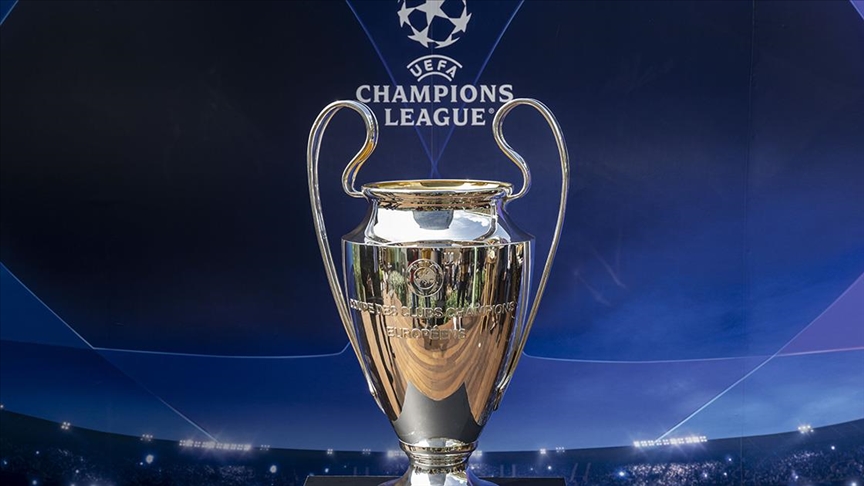
The UEFA Champions League is the elite club competition that brings together Europe’s strongest teams each season, serving as the pinnacle stage of European football.
This competition sits at the heart of modern football in terms of both sporting level and economic impact, and is followed closely by millions of fans every season.
In this guide you can find the tournament’s history, the new league format, the number of teams, the paths for participation from Turkey, and key statistics all on one page.
By following the sections below you can understand the tournament in general terms, and for more detailed topics you can navigate to the related subpages.
The UEFA Champions League is an elite club competition in which the most successful clubs from national leagues affiliated with UEFA participate, aiming to determine Europe’s best team each season.
Participating clubs earn the right to compete in this tournament based on their rankings in their own leagues and compete throughout the season in the group stage and knockout rounds.
The structure of the competition means high competition, a dense fixture schedule, and top-level football for both fans and clubs.
The foundation of the Champions League rests on the European Cup for Champions Clubs started in the 1950s, and from that period onwards it has been positioned as the continent’s most prestigious club competition.
In the early 1990s, UEFA refreshed the brand and format and restructured the tournament under the name UEFA Champions League, giving the format a modern identity with a group stage and a widening set of participants.
Over the years, the number of participants, broadcasting model, and format details have changed, but the fundamental aim of the tournament has remained the same: to determine Europe’s best club team on the field.
For many years, the Champions League was played with a 32-team group system, and clubs progressed first in their groups and then in knockout rounds.
In the new era, instead of a group structure, a single-league-based format has been adopted, with more teams to create a broader and more diverse competitive landscape.
| Feature | Old system | New league format |
|---|---|---|
| Number of teams | 32 teams, multiple groups | 36 teams, single league table |
| Structure | Groups and group standings | League standings and broad table |
| Opponent diversity | Few opponents within the same group | More diverse range of opponents |
With this change, fans have the opportunity to watch more varied matchups and clubs also begin facing a more diverse set of opponents in the league stage.
The new format is built on a league-table-based structure commonly known as the Swiss model, and teams are ranked in a broad league table rather than being divided into fixed groups.
Each club plays a limited number of matches in the league phase, but these matches are distributed among opponents of different profiles and the points accumulate in the same league table.
Thus, competitive balance is preserved and the opportunity to watch teams of different styles throughout the season increases.
In the modern format, 36 teams participate in the league stage, and this allocation is distributed according to the country coefficient system reflecting the performance of UEFA member countries.
Countries with stronger leagues typically have more direct entries, while representatives from leagues placed in lower tiers try to reach the tournament through qualifying rounds and play-offs.
| League level | Number of teams range | Short description |
|---|---|---|
| Top-tier leagues | More slots | Supported by a high country coefficient |
| Mid-tier leagues | Limited slots | Part direct, partly through qualifying rounds |
| Lower-tier leagues | Fewer slots | Primarily through qualifying rounds and play-offs |
This structure allows the tournament to bring together both the strongest leagues and clubs from different levels in a balanced way.
The UEFA country coefficient system is calculated based on leagues’ performance in European competitions and determines how many teams can be sent to the Champions League and other tournaments for future seasons.
For leagues like Turkey, this coefficient defines the line between direct participation and the need for qualifying; therefore every point earned in Europe becomes critical in the long term.
As a league aiming for mid-to-high-level status, Turkey seeks to improve its clubs’ performance in Europe to strengthen both its slots and the starting round level.
Participation from Turkey in the Champions League is basically determined by the finishes in the Süper Lig and the position in the country coefficient table.
In some periods the Süper Lig champion may go directly to the group stage, while in others the same team may have to start in the qualifying rounds or play-offs.
| Süper Lig position | Starting round | Short note |
|---|---|---|
| Champion | League or play-off stage | Depends on country coefficient |
| Second | Qualifying rounds or play-off | Harder path depending on conditions |
| Other top positions | Generally lower tournaments | Europa League or Conference League path |
Detailed club-by-club scenarios and historical performances are better explored on separate Turkey-focused pages.
In the league phase, teams play a certain number of home and away matches and the results from each match are reflected in the joint league table.
Wins bring the most points, draws fewer, losses zero; final ranking is determined by total points.
| Criterion | Value | Description |
|---|---|---|
| Number of matches | Limited league matches | Played against opponents of different profiles |
| Scoring | Win/Draw/Loss | Total points determine the league table |
| Ranking | Total points and tiebreakers | In case of equality, extra statistics come into play |
This structure is relatively simple for fans to follow, but for clubs it creates an environment where every match carries high risk and opportunity.
After the group stage, the top teams advance directly to the Round of 16, while some teams compete in additional playoff matchups to reach this stage.
The Round of 16, quarterfinals and semifinals are traditionally played over two legs; advancement is by aggregate score, and squads are tested at the highest level.
| Round | Match type | Short format description |
|---|---|---|
| Round of 16 | Two-legged ties | Aggregrate home and away scores |
| Quarterfinal | Two-legged ties | Two-legged series to reach the semifinal |
| Semifinal | Two-legged ties | Round that determines the final ticket |
| Final | Single match | Championship match played at a neutral venue |
The final, with its single-match format and neutral venue atmosphere, is regarded as the pinnacle of the season and is one of the most-watched events on the football calendar.
The Champions League final is considered one of the most prestigious matches in club-level world football and the final destination of the long season journey.
This match not only determines the trophy winner but also leaves a lasting mark on the club’s history, brand value, and fan memory.
The winning team gains the opportunity to compete in additional events such as the UEFA Super Cup and global club tournaments.
The Champions League serves as a huge financial leverage for participating clubs through high broadcasting revenues, prize money, and sponsorship deals.
Performance in the tournament affects not only the seasonal budget but also mid- and long-term transfer strategies, infrastructure investments, and branding projects.
| Revenue item | What it represents | Short note |
|---|---|---|
| Prize money | Revenue based on sporting success | Increases according to the result obtained in each round |
| Broadcast revenues | Central broadcasting deals | Club share depends on performance and market size |
| Sponsorship | Linked to brand value | Increases visibility deals in the tournament |
Therefore, for many clubs, participating in the Champions League becomes a critical objective for both prestige and a sustainable financial model.
In the tournament’s history, some clubs have won the trophy many times and have become synonymous with the Champions League, experiencing long periods of dominance.
Behind these successes are usually strong academies, stable management, the right coaching staff choices, and top-quality players.
| Type of achievement | General description | Example description |
|---|---|---|
| Multiple championships | Winning the trophy more than once | A tradition of success spanning different generations |
| Back-to-back titles | Winning championships in consecutive years | A dominant period built quickly |
| Unlikely victories | Surprise championships | Teams not favored before the tournament |
These stories transform the Champions League from just a football tournament into a narrative universe that lives in fans' memory.
Turkish clubs have shown notable performances in the Champions League across different periods, occasionally reaching the upper rounds and sending strong messages onto the European stage.
Galatasaray, Fenerbahçe, Beşiktaş and other representatives are remembered for both memorable victories and challenging away performances.
| Club profile | General European characteristic | Short summary |
|---|---|---|
| Experienced representatives | Frequent participation and strong home atmosphere | Important victories against big teams |
| Emerging clubs | Less experience | Clubs making their mark on the European stage |
Detailed statistics and season-by-season performances can be explored on dedicated Turkish club pages.
The UEFA Champions League, the Europa League, and the Europa Conference League together form the three main pillars of European club football.
The key differences among these competitions can be summarized in terms of participant levels, revenue potential, prestige, and competition intensity.
The Champions League sits at the top of this structure, while the other competitions target a broader range of clubs and different objectives.
Champions League matches are broadcast on TV channels and digital platforms that have deals with UEFA; these agreements are updated periodically.
In Turkey, broadcasting rights are consolidated under a specific broadcaster, so fans should regularly check the current broadcaster information and package contents.
Official broadcaster channels and apps usually publish the schedule and broadcast program in detail ahead of the season.
For those wanting a deeper look at the Champions League, match counts, goals scored, assists, goalkeeper performances, and various types of records are important data headings.
These statistics help track how teams evolve over time, the impact of players, and the overall trends of the tournament.
Official sources and reliable statistics platforms present these data to fans with season-based tables and charts.
The Champions League season can become a weekly ritual for football fans; therefore planning match days is an important part of the viewing experience.
Tracking match times, pre-preparing broadcast platforms, and planning viewing with friends are simple yet effective steps to increase enjoyment.
These steps help you build a more consistent and enjoyable Champions League viewing routine throughout the season.
Because the Champions League format is updated frequently, many fans may still confuse the differences between the old group structure and the new league format.
Also, the assumption that some leagues always send a fixed number of teams is false; country coefficient tables show that this balance can change over time.
Correcting these misconceptions helps you follow the tournament in a more accurate and healthy framework.
First check how many teams participate in the league phase and how many matches are played, then how the knockout rounds are structured.
By examining the Süper Lig standings and the UEFA country coefficient table for the season, you can see which positions earn a Champions League berth.
You can quickly see the matches planned for that day by using a date filter on current fixtures and live score pages.
First identify the official broadcaster and platforms applicable for Turkey, then subscribe to the package you need.
Essentially, focus on the league phase, country quota, and knockout rounds to grasp the general framework in a few minutes.
You can follow season-by-season performances through the clubs’ official pages, statistics platforms, and dedicated European records pages.
The UEFA Champions League is an elite tournament in which the most successful clubs from UEFA-affiliated leagues participate, determining Europe’s best team each season.
The tournament began in the 1950s as the European Cup for Champions Clubs and was renamed the UEFA Champions League in the 1990s with updated format and branding.
In the old system, clubs competed in fixed groups, while in the new format there is a 36-team single league table and teams play a limited number of matches against different opponents.
In the modern format, 36 teams take part in the league phase, and this allocation is distributed among leagues according to the UEFA country coefficient system.
The number of teams Turkey can send depends on the UEFA country coefficient ranking at that time, and it can change over time.
In some seasons the Süper Lig champion goes directly to the group stage, while in others they may have to start in the qualifying rounds or playoffs.
Each team plays a limited number of home and away matches in the league phase, and points from these matches are added to the common league table.
The points system generally awards points based on win, draw, and loss outcomes; at season’s end, total points and tiebreakers determine the standings.
These rounds are played over two legs; the team that advances is determined by the aggregate score of home and away matches.
The final is played in a neutral stadium, as predetermined by UEFA, in a single match.
The Champions League winner competes against the Europa League winner in the UEFA Super Cup and earns the right to participate in global club tournaments.
Matches are broadcast by the official broadcaster and its TV or digital platforms for Turkey; you should check the current broadcaster information.
There are clubs that have won the trophy many times and built long-running success streaks; these teams have become associated with the Champions League brand.
Turkish clubs have occasionally advanced to the upper rounds and achieved notable performances on the European stage.
UEFA may update the format from time to time in response to the football calendar and competitive balance; future adjustments are possible.
Plan match times in advance, prepare a comfortable viewing environment, and pay attention to responsible consumption habits for a healthier football routine in the long term.




© 2026 Selcuksports